


If you've been scrolling through ingredient lists on your favorite organic skincare products, you might have noticed something interesting: Lactobacillus ferment. It sounds scientific, maybe even a little intimidating, but this powerhouse ingredient is actually one of the coolest things happening in clean beauty right now.
Let's talk about why your skin is basically obsessed with it, and why it's showing up in so many natural formulations.
What Exactly Is Lactobacillus Ferment?
Think of Lactobacillus ferment as the skincare version of the probiotics you put in your gut. Just like your digestive system has good bacteria that keep things running smoothly, your skin has its own ecosystem of microorganisms: that's your skin microbiome.
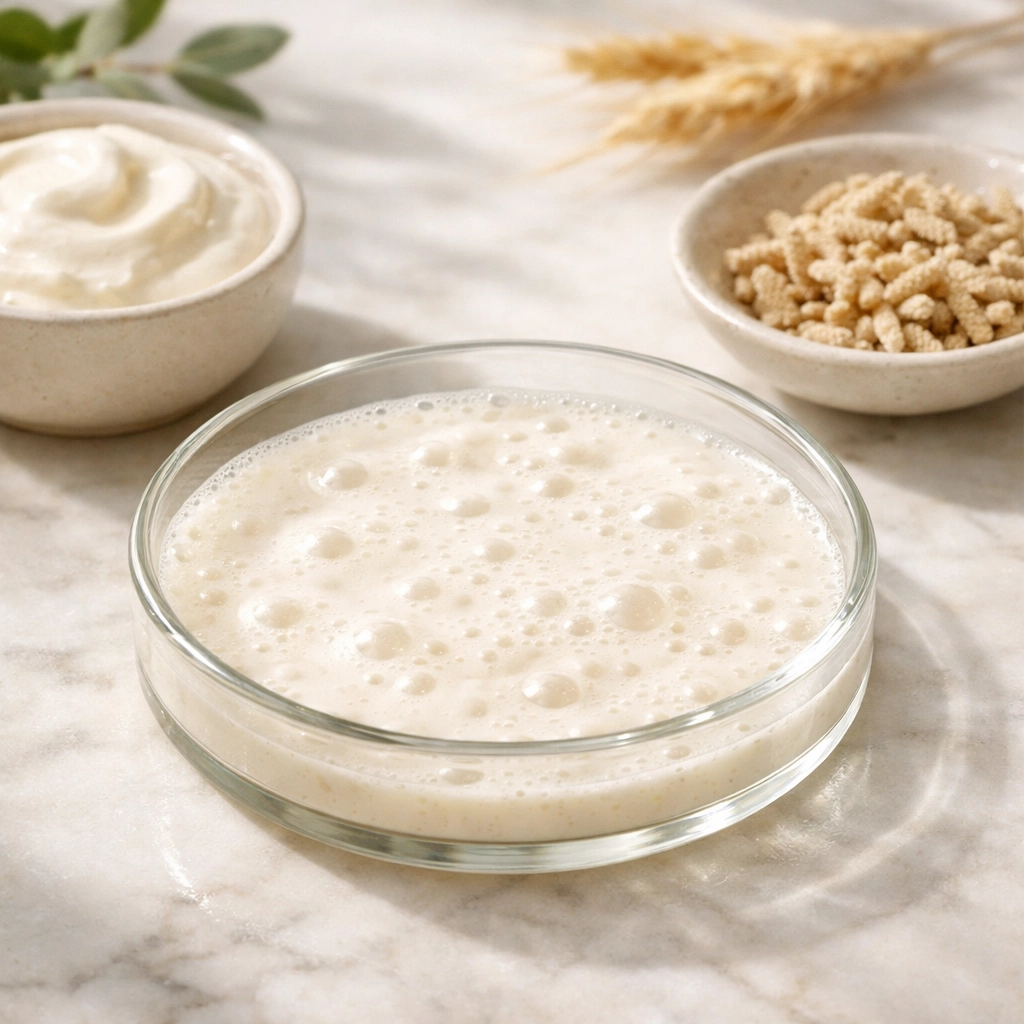
Lactobacillus ferment is created through a fermentation process using Lactobacillus bacteria (the same family that gives us yogurt and kimchi). When these beneficial bacteria get to work, they produce metabolites like lactic acid, peptides, and enzymes that your skin absolutely loves. It's nature's way of creating a protective shield that keeps your complexion balanced and happy.
The 7 Ways Lactobacillus Ferment Works Its Magic
1. Delivers Beneficial Metabolites to Balance Your Skin
Here's where it gets really cool. Lactobacillus ferment produces lactic acid and peptides that actively work to keep your skin's microbiome in balance. This helps address a whole range of concerns: from acne and sensitivity to dryness and irritation. Think of it as sending in reinforcements to help your skin do what it does best: protect and repair itself.
2. Keeps Harmful Bacteria in Check
Nobody wants unwanted guests crashing the party on their face. Lactobacillus ferment creates an environment where harmful bacteria and fungi just can't thrive. The antimicrobial properties are so effective that formulations only need about 1% concentration to make a real difference in reducing skin sensitivity. That's pretty impressive for a natural ingredient.
3. Boosts Your Skin's Natural Defense System
Your skin already produces its own antimicrobial peptides: they're like tiny soldiers protecting your complexion from invaders. Lactobacillus ferment actually upregulates the genes responsible for these defenses, enhancing your skin's natural ability to protect itself. It's not doing the work for your skin; it's teaching your skin to be stronger on its own.
4. Strengthens Your Skin Barrier
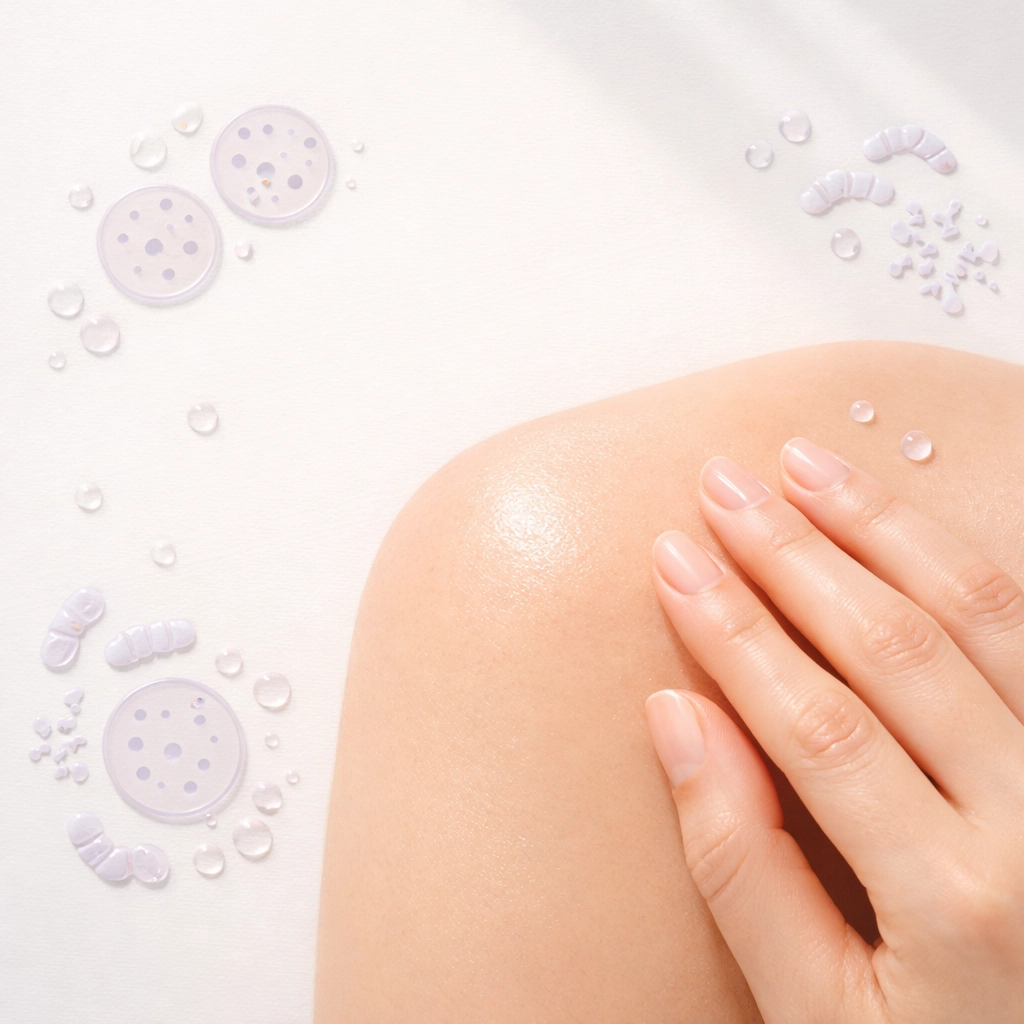
A healthy skin barrier is everything. It keeps moisture in and irritants out. Lactobacillus ferment stimulates the production of ceramides and essential lipid molecules that reinforce this barrier. When your barrier is strong, your microbiome has the perfect environment to flourish, and your skin looks plump, healthy, and resilient.
5. Calms Inflammation and Redness
If you deal with sensitivity, rosacea, or eczema, this one's for you. Lactobacillus ferment helps modulate your skin's immune response by lowering inflammatory cytokines. Translation? It tells your skin to chill out and stop overreacting to triggers. Less inflammation means less redness, irritation, and discomfort.
6. Helps Regulate Oil Production
Breakout-prone folks, listen up. When your skin's microbiome is out of balance, oil production can go haywire. By rebalancing the ecosystem on your skin's surface, Lactobacillus ferment helps normalize sebum production and can even help unclog pores and follicles. Fewer clogged pores generally means fewer breakouts.
7. Provides Antioxidant Protection
As if all that wasn't enough, Lactobacillus ferment also produces protective antioxidants like ferulic acid and polyphenols. These compounds neutralize free radicals from pollution, UV exposure, and other environmental stressors that can damage your skin and disrupt your microbiome. It's like having a tiny army protecting your skin from daily life.
Why Organic Skincare Loves This Ingredient
Here's the thing about creating truly effective organic skincare: you need ingredients that actually work, but you also want to avoid harsh synthetic preservatives that can mess with your skin's natural balance. That's where Lactobacillus ferment shines.
It functions as a natural, skin-friendly preservative that works with your microbiome instead of against it. Unlike some conventional preservatives that can strip away good bacteria along with the bad, Lactobacillus ferment is non-irritating, non-sensitizing, and safe for all skin types: even the most sensitive or reactive complexions.
This makes it an absolute game-changer for organic formulations that prioritize both efficacy and skin health. Products can stay fresh and stable without compromising the integrity of your skin's natural defenses.
Real Talk: Does It Actually Make a Difference?
You might be wondering if this is just another trendy ingredient that sounds good on paper but doesn't deliver. The research is pretty compelling. Clinical studies show that Lactobacillus ferment can genuinely improve skin hydration, reduce sensitivity, and support a healthier, more balanced complexion.
The key is consistency. Like any quality ingredient in your organic skincare routine, you'll see the best results when you use it regularly. Your skin's microbiome doesn't transform overnight: it needs time to rebalance and strengthen.
How to Incorporate It Into Your Routine
Looking for products with Lactobacillus ferment? Check out our Super THD Vitamin C Serum. This formulation is designed to work synergistically with your skin's natural processes.
The beauty of this ingredient is that it plays well with others. You can layer it with your other favorite organic skincare products without worrying about conflicts. In fact, when combined with hydrating ingredients like hyaluronic acid or antioxidants like vitamin C, Lactobacillus ferment helps those ingredients work even better by creating an optimal environment for absorption.
The Bottom Line
Your skin is an ecosystem, not a blank canvas. The more we learn about the skin microbiome, the more we realize that healthy skin isn't about stripping everything away: it's about maintaining balance and supporting your skin's natural intelligence.
Lactobacillus ferment does exactly that. It protects, strengthens, balances, and defends without harsh chemicals or aggressive tactics. For anyone who's passionate about clean beauty and actually understanding what they're putting on their skin, this ingredient is worth getting excited about.
Whether you're dealing with breakouts, sensitivity, dryness, or just want to maintain healthy, glowing skin, supporting your microbiome with ingredients like Lactobacillus ferment is a smart move. It's nature and science working together: which is pretty much the whole point of quality organic skincare, right?
Your skin has been taking care of you this whole time. Lactobacillus ferment just gives it the backup it deserves.

